Posts by Tags

California

“High-severity fire now dominant in California forests” now published in PNAS!

less than 1 minute read

Published:

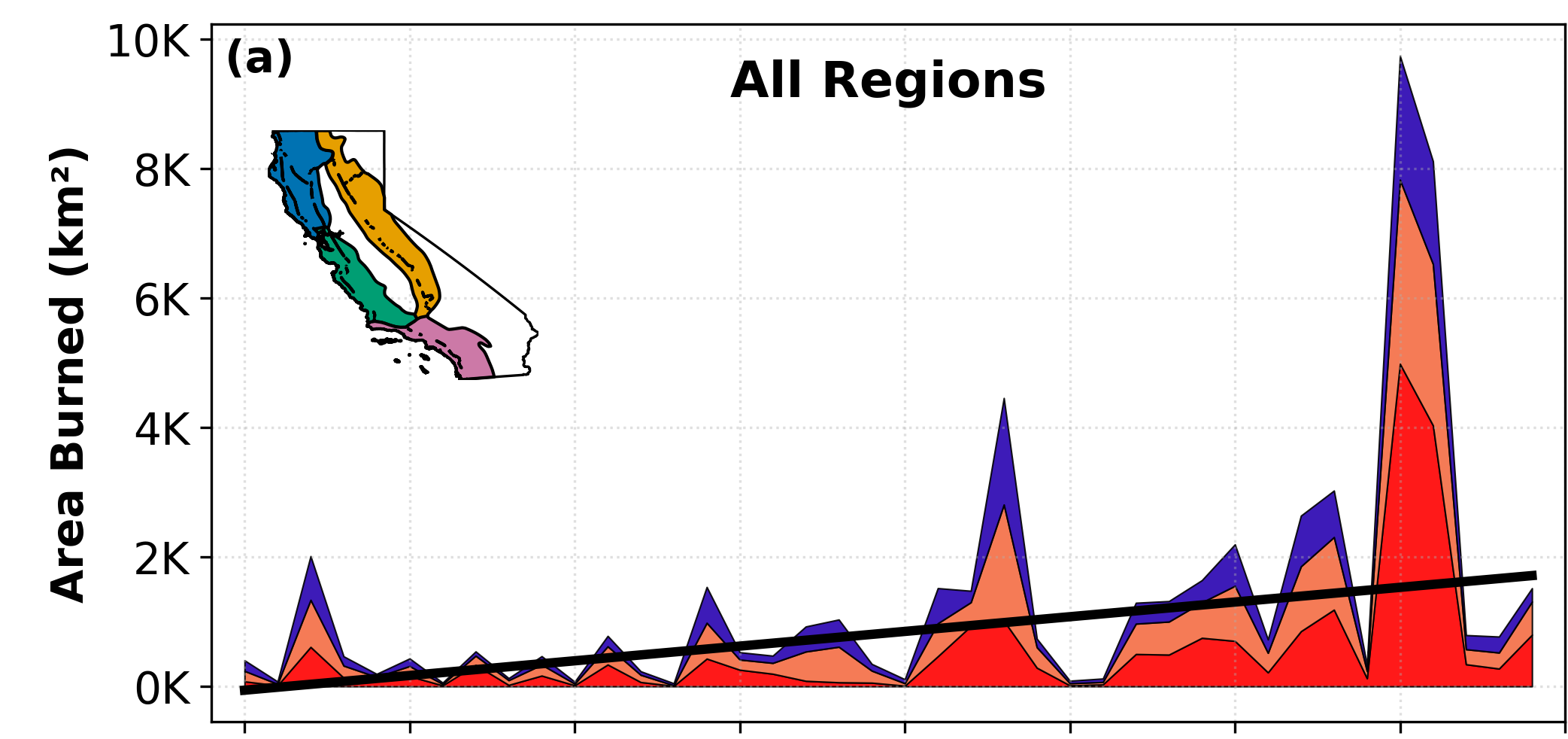
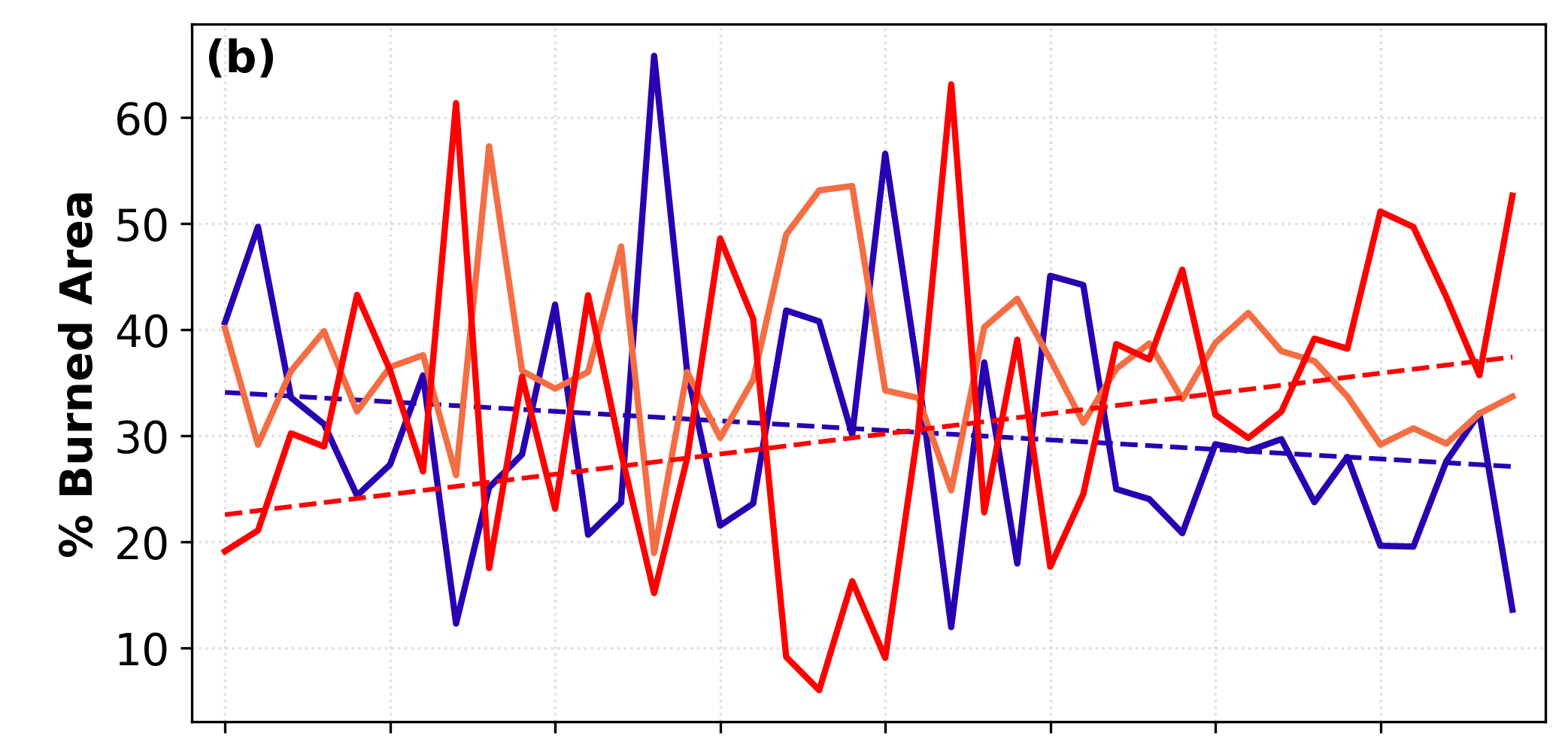
Annual forest area burned by severity class Annual proportion burned by severity class

Time series of annual area burned at low (blue), moderate (orange), and high (red) severity (top), and the annual proportion burned at low, moderate, and high-severity (bottom).

Fire severity exerts crucial ecological controls in many forests globally. In California, where annual forest-fire area has increased dramatically in recent decades, understanding how burn severity is changing is essential for informing environmental policy and management. We developed remotely sensed high-resolution maps of severity for 4,391 forest fires to assess trends and drivers of burn severity across California's forests from 1985–2024. We observed that historically dominant low-severity fire was increasingly replaced by high-severity stand-replacing fire, which became the most common severity class beginning in 2012.

burn severity

“High-severity fire now dominant in California forests” now published in PNAS!

less than 1 minute read

Published:

Annual forest area burned by severity class Annual proportion burned by severity class

Time series of annual area burned at low (blue), moderate (orange), and high (red) severity (top), and the annual proportion burned at low, moderate, and high-severity (bottom).

Fire severity exerts crucial ecological controls in many forests globally. In California, where annual forest-fire area has increased dramatically in recent decades, understanding how burn severity is changing is essential for informing environmental policy and management. We developed remotely sensed high-resolution maps of severity for 4,391 forest fires to assess trends and drivers of burn severity across California's forests from 1985–2024. We observed that historically dominant low-severity fire was increasingly replaced by high-severity stand-replacing fire, which became the most common severity class beginning in 2012.

remote sensing

“High-severity fire now dominant in California forests” now published in PNAS!

less than 1 minute read

Published:

Annual forest area burned by severity class Annual proportion burned by severity class

Time series of annual area burned at low (blue), moderate (orange), and high (red) severity (top), and the annual proportion burned at low, moderate, and high-severity (bottom).

Fire severity exerts crucial ecological controls in many forests globally. In California, where annual forest-fire area has increased dramatically in recent decades, understanding how burn severity is changing is essential for informing environmental policy and management. We developed remotely sensed high-resolution maps of severity for 4,391 forest fires to assess trends and drivers of burn severity across California's forests from 1985–2024. We observed that historically dominant low-severity fire was increasingly replaced by high-severity stand-replacing fire, which became the most common severity class beginning in 2012.

wildfire

“High-severity fire now dominant in California forests” now published in PNAS!

less than 1 minute read

Published:

Annual forest area burned by severity class Annual proportion burned by severity class

Time series of annual area burned at low (blue), moderate (orange), and high (red) severity (top), and the annual proportion burned at low, moderate, and high-severity (bottom).

Fire severity exerts crucial ecological controls in many forests globally. In California, where annual forest-fire area has increased dramatically in recent decades, understanding how burn severity is changing is essential for informing environmental policy and management. We developed remotely sensed high-resolution maps of severity for 4,391 forest fires to assess trends and drivers of burn severity across California's forests from 1985–2024. We observed that historically dominant low-severity fire was increasingly replaced by high-severity stand-replacing fire, which became the most common severity class beginning in 2012.